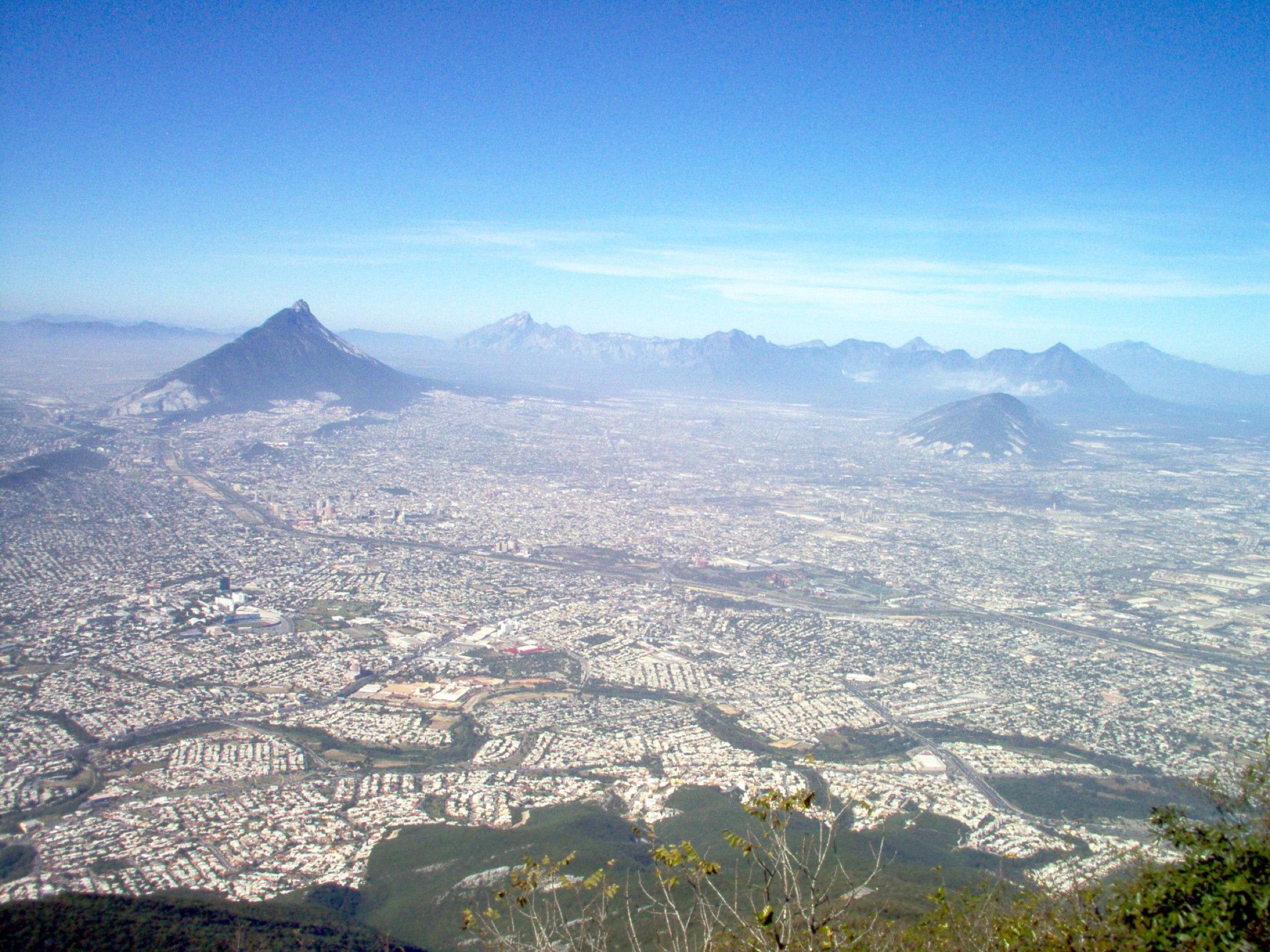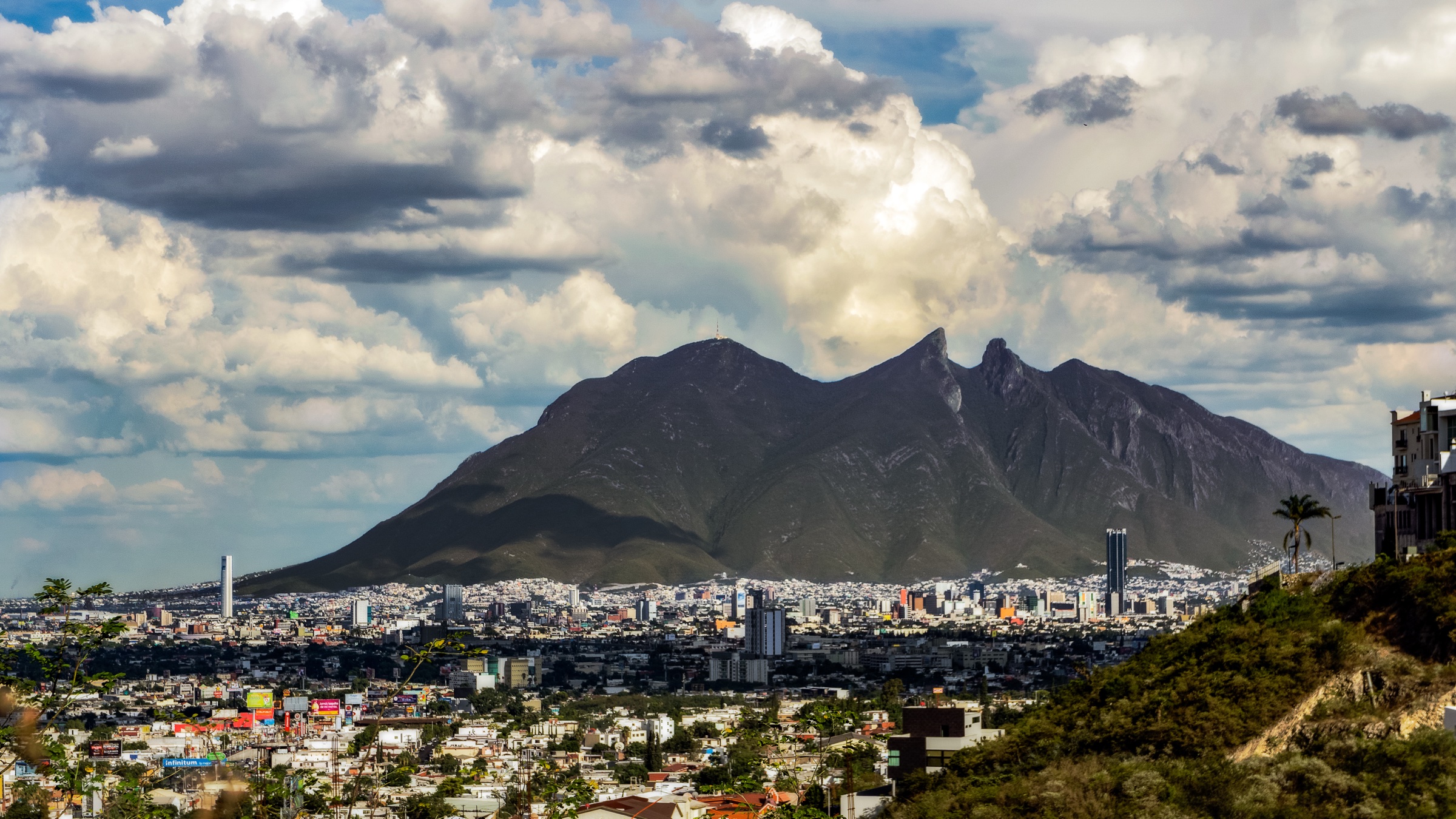
Most American travel writing about Monterrey is describing a city that has not existed for more than a decade. It is reciting a memory of 2010 to 2012, when the cartel violence peaked here, and then never updating itself. The Monterrey you will arrive in — the one that exists in 2026 — is structurally different, and the numbers say so plainly. By every standard measure of urban crime, the part of Monterrey a visitor occupies is significantly safer than the urban core of any large American city.
The numbers, side by side
Homicide rate is the cleanest comparable measure across countries, because it is the hardest crime to under-report and the most consistently classified. The most recent year-over-year data, drawn from FBI Uniform Crime Reports for the U.S. cities and from Mexico’s Secretariado Ejecutivo del Sistema Nacional de Seguridad Pública (SESNSP) for the Mexican municipalities, looks like this:
- Chicago. 18.3 homicides per 100,000 residents in 2024.
- Washington, D.C. 17.0 per 100,000 in 2024.
- Atlanta. Approximately 15 per 100,000 in 2024 (down 8 percent from 2023).
- Houston. 13.9 per 100,000 in 2024.
- Los Angeles. 7.0 per 100,000 in 2024.
- New York City. 5.8 per 100,000 in 2024 — the lowest rate of any large U.S. city.
And, on the other side of the comparison:
- Greater Monterrey metropolitan area. Approximately 12.7 per 100,000 in 2025, after a 52.7 percent year-over-year decline — the lowest rate in more than a decade. This is below Chicago, D.C., and Atlanta, and within a point of Houston.
- San Pedro Garza García — the municipality where almost every visitor actually stays. Consistently below 2 homicides per 100,000 residents. Lower than every U.S. city listed above, including the historically safe New York. San Pedro is, by independent national rankings, the safest large municipality in Mexico, and on most measures the safest in Latin America.
Across broader violent crime — aggravated assault, robbery, property theft — the comparison is even more lopsided. New York City registers roughly 530 violent crimes per 100,000 residents. Atlanta is over 1,000. Houston exceeds 1,100. San Pedro Garza García reports under 200. There is no measure of street crime on which the part of Monterrey you will use comes out worse than the city you flew in from.
By every standard measure of crime — homicide, violent crime, robbery, property crime — the part of Monterrey a visitor occupies is significantly safer than Los Angeles, Chicago, New York, Washington, Atlanta, or Houston.
Why the perception lags the data
Two reasons. First, the 2010 to 2012 violence was real, severe, and well-covered in American media; the recovery has been less newsworthy and is therefore unreported. Second, the U.S. State Department classifies travel risk at the state level, and Nuevo León is grouped with regions a hundred miles north (parts of Tamaulipas, parts of Coahuila’s northern strip) where the picture is genuinely different. The advisory is averaging across territory that has nothing in common.
If the State Department issued advisories on its own country with the same granularity, Cook County (Chicago), parts of Atlanta, Baltimore, and the District of Columbia would warrant comparable or stronger warnings than Nuevo León by the same statistical thresholds.
Where you will actually be
If you are a typical visitor, your time will be spent in three or four places. Each of them is, as a matter of fact, safer than its closest American analogue.
- San Pedro Garza García. Sonata, Calzada del Valle, Valle Oriente. This is where the hotels are, where the restaurants are, where the rooftop bars are. The municipality has its own police force, considered better-equipped than the state’s. The streets are clean in a way that is genuinely uncommon. You can walk home from dinner at midnight.
- Barrio Antiguo. Three blocks around Calle Padre Mier. Mezcalerías, cantinas with trova, late-night taquerías. Camera coverage is dense, police are visibly stationed throughout, and the area runs until morning Thursday through Saturday. Coming from Los Angeles, Chicago, New York, Washington, Atlanta, or Houston, you are moving to a meaningfully lower-crime environment.
- Centro / Macroplaza. The historic core. Foot patrols, well-lit at night, full of families on weekends. The Faro del Comercio fires its green laser at dusk. The Cathedral, MARCO, the Museum of Mexican History, all within a five-minute walk.
- The outdoor parks. Chipinque, La Huasteca, Cumbres de Monterrey. Park rangers, posted maps, no concerns beyond the usual rules of mountain ecology — bring water, do not hike at night.
For the texture of Barrio Antiguo on a Friday night — the bars, the cantinas, the streetscape — the dedicated guide at barrioantiguo.com.mx is the best resource. For the residential character and dining culture of San Pedro, sanpedrogarza.com.
The infrastructure behind the numbers
The safety is not accidental. Nuevo León built one of the most surveilled, intensively-policed urban environments in the Americas in the decade after the 2011 peak. The C5 command center integrates several thousand cameras with license-plate recognition and gunshot detection across the metro. Fuerza Civil — the state police force, rebuilt from the ground up between 2011 and 2014 — runs the highway corridors and the industrial perimeter. San Pedro maintains its own municipal force at a per-capita staffing ratio comparable to Singapore. Response times in the central municipalities are measured in single-digit minutes.
The infrastructure is visible. You will see camera installations on every major intersection in San Pedro. You will see municipal police standing on Padre Mier on a Friday night. You will see Fuerza Civil on the Carretera Nacional. None of this is performative; it is the operational baseline that produced the homicide-rate decline.
The driving question
The single most-asked sub-question is about driving from Texas. The honest answer: yes, it is fine, and millions of people do it every year. The route from Laredo via Colombia Solidarity Bridge to Highway 85D is the safest and best-maintained crossing. The toll roads are well-policed. Daytime driving is uneventful. The genuine restriction is not the highway itself but a long-standing practice: do not drive on remote rural roads in northeastern Mexico at night. That advice was true in 2010 and remains good practice now, but it has nothing to do with the experience of a visitor to the metro.
Inside the city, Uber and Didi both work reliably and are cheap by U.S. standards. They are the right default for getting around at night. Walking in San Pedro and Barrio Antiguo is also fine; standard urban precautions — do not flash valuables, do not leave your phone on a table in a cantina — apply as they would in any major city.
The U.S. State Department advisory
Nuevo León currently sits at Level 2: “Exercise Increased Caution.” This is the same level the State Department assigns to France, Italy, Germany, and the United Kingdom. It is a lower level than several U.S. states would warrant if the State Department issued advisories on its own territory. The advisory exists because the federal U.S. government does not differentiate between Nuevo León — with its policing, its wealth, its dense surveillance — and parts of Tamaulipas a hundred miles north, where the situation is genuinely different. By the same standard, a tourist in Manhattan or Beverly Hills would be warned about conditions in the Bronx or South Central. The framing is too coarse to be useful.
What changed, and when
The transformation took place in the mid-2010s. After the 2011 peak, Nuevo León made a series of structural investments: the C5 surveillance system, a doubled state police force, the creation of Fuerza Civil, the rebuilding of San Pedro’s municipal force, federal coordination on the Cadereyta and Apodaca industrial corridors. The homicide rate fell more than seventy percent between 2011 and 2018, plateaued through 2022, and dropped another 52.7 percent in 2025. Property crime — the category that affects most tourists — is lower in San Pedro than in any large U.S. city by a wide margin.
None of this is to claim Monterrey is perfect. No city of five million people is. But the question travelers actually ask — whether the standard tourist experience of staying in San Pedro, eating at Pangea, walking Barrio Antiguo at night, hiking Chipinque at dawn is safe — the answer is yes, unambiguously, with substantial statistical margin, and the comparison to American urban cores favors Monterrey by every measure.
One last practical note
The thing that does occasionally affect tourists is the same thing that affects them everywhere: petty street theft in crowds, the occasional credit-card skimmer at low-end ATMs, the small risk of an aggressive driver. Use bank ATMs (Banorte, BBVA, Banamex). Carry a copy of your passport, not the original. Tell your hotel where you are going if you plan a long day trip. These are universal travel practices, not Monterrey-specific concerns.
If you have any remaining doubts after reading this, the single best test is to ask any Regio you know. They will look at you slightly confused. Their city has not been the city of the headlines for a long time.