Northern Mexican cooking is the cleanest, most fire-driven food in the country. There are almost no marinades. There are almost no sauces. The cooking is built around three things — fire, salt, and time — and a small number of ingredients that have been refined over generations into the regional vocabulary you encounter today. Understanding it is mostly a matter of knowing what each dish actually is.
Cabrito al pastor
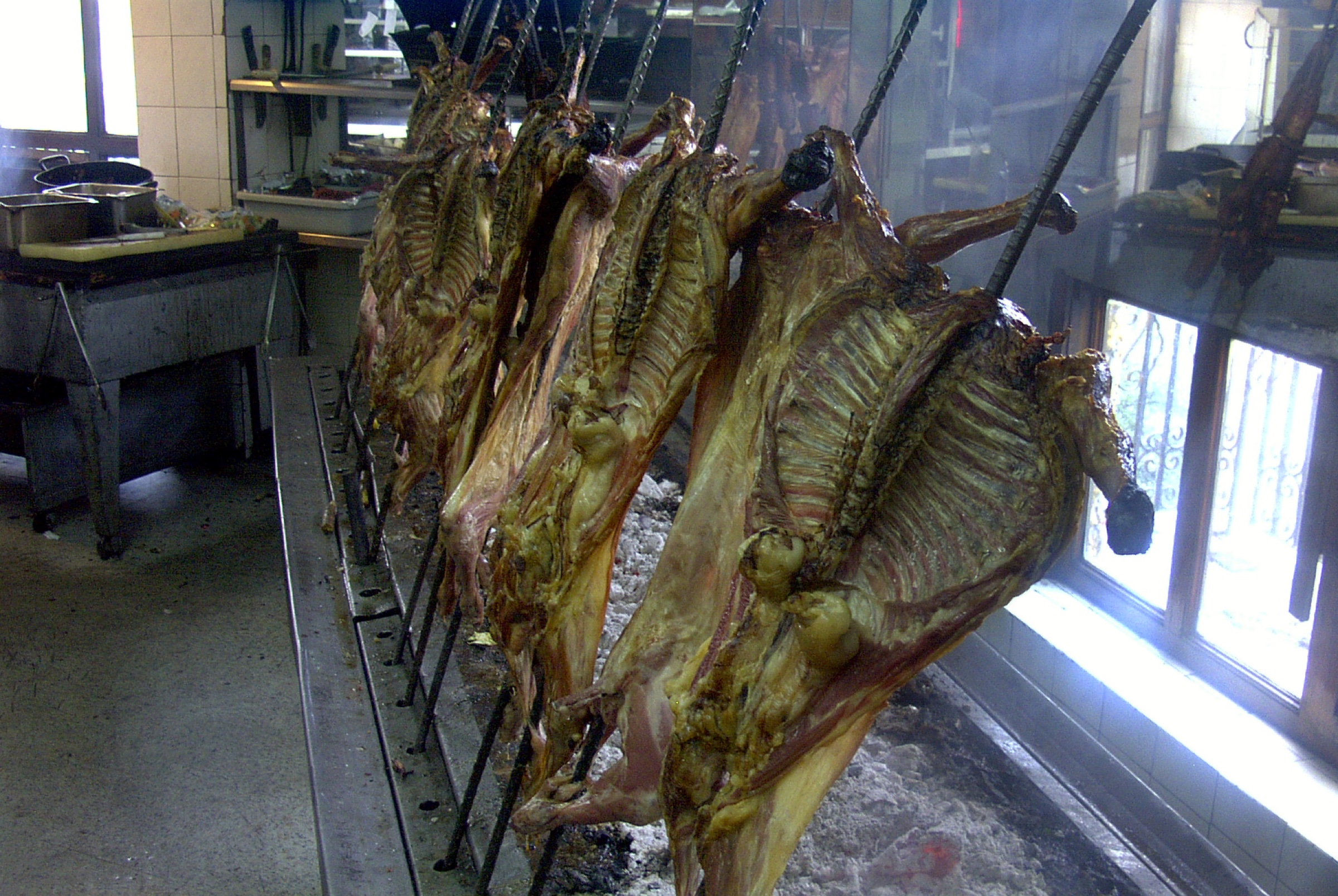
The defining dish. A young goat, six to eight weeks old, butterflied open and mounted on a vertical iron stake, then roasted at an angle next to live coals for several hours. The result is meat with a thin crackling skin and a deep, gamey flavor that is unlike anything in central or southern Mexico. The classic cuts are riñonada (the kidney side, richer), pierna (leg, leaner), and cabeza (the head, eaten by people who know what they are doing).
Order it with flour tortillas (always flour in the north, not corn), guacamole, salsa, and a side of frijoles charros. The traditional accompaniment is a Carta Blanca or Tecate, which were brewed here for a hundred years before the craft beer expansion.
Where: El Rey del Cabrito in Centro is the classic, the room with the spits in the window. El Gran Pastor is what locals quietly prefer — better execution, less theater, multiple locations. Las Monjitas is older and quieter, with a more traditional room.
Carne asada (the social form, not the dish)
Carne asada in Monterrey is not a recipe. It is a social institution. On any Saturday or Sunday, families gather around a grill (the asador) in a backyard or rooftop and cook a long sequence of cuts over mesquite or charcoal: arrachera (skirt steak), cabrería (rib eye), chistorra (a thin red sausage), bell peppers, onions, occasionally cabrito ribs. The meat is salted, nothing else, and cooked over high heat. The flour tortillas come out of a basket wrapped in cloth.
The accompaniments are also institutional. Frijoles charros: pinto beans simmered with bacon, chorizo, jalapeños, tomato, and cilantro — a soup, eaten with a spoon alongside the meat. Salsa molcajeteada: roasted tomato, garlic, and serrano chile pulverized in a stone mortar. Guacamole: avocado, lime, salt, optionally a little tomato.
At restaurant scale, the version is at La Nacional, which is the closest thing to a Sunday family lunch in commercial form.
Machacado
Sun-dried beef, traditionally air-dried on rooftops in the dry mountain wind, shredded fine. Eaten at breakfast almost always with eggs — machacado con huevo. The texture is somewhere between corned beef hash and biltong, with a savory umami density that is genuinely difficult to find outside the northeast. Las Monjitas does it the way it should be done, slightly moist, with a side of frijoles refritos and warm flour tortillas.
Some breakfast versions come with tomato and onion folded in. Both are correct.
Cabuches and northern produce
The dry-climate plants of the Sierra Madre form a small but distinct vegetable canon. Cabuches are the unopened buds of the biznaga cactus, pickled or sauteed with onion and chorizo. Nopales (cactus pads) appear in salads. Flor de palma, the bloom of the yucca, is occasionally cooked with eggs. Mexican spinach (quelites) and verdolagas (purslane) appear in country-style cooking. These are not staples in the tourist restaurants but they belong to the region and a curious diner can find them.
Glorias de Linares
A regional dulce: caramel made from goat’s milk (cajeta de cabra) reduced with sugar and pecans into a chewy, intensely sweet candy, individually wrapped in cellophane. Glorias originated in the town of Linares, two hours south of Monterrey, in the late nineteenth century, and remain a definitively northern product.
Pick them up at any dulcería on the way out of the city. Alteña and Karla’s are both reliable. They keep at room temperature for months.
For the city's serious frijoles and bean culture, frijoles.mx tracks restaurants where the beans are made from scratch. For glorias and northern dulces, glorias.mx. For specific dining rooms: jabalina.com.mx in San Pedro, lasufrida.mx and cataluna.mx in Centro, morandana.mx for modern fish, trecelunas.com.mx in Barrio Antiguo, meteoropizza.com for the Barrio pizza school, lapapee.com and mauimty.com for higher-end San Pedro.
Coffee, briefly
Monterrey is in the middle of a real coffee renaissance, driven by a handful of roasters in San Pedro and Barrio Antiguo. The bean is usually sourced from Veracruz or Chiapas, the roasting is done locally, the rooms are quietly serious. Mashiato, Seabird, and Elena are the standard-bearers in San Pedro; Cafe Callitos and Roland anchor Barrio Antiguo; Aurora, El Cafelito, and Cafe Gaby keep the Centro tradition alive. The dedicated coffee guide at mexicocafes.com tracks the wider scene; the Monterrey-specific portal is at cafesofmexico.com.
The serious kitchens
For modern, technique-driven cooking, two kitchens are essential. Pangea, in San Pedro, is Guillermo González Beristáin’s tasting menu, twenty-five years in, regularly ranked among Mexico’s top restaurants. Koli Cocina de Origen, also in San Pedro, is Chef Rodrigo Rivera-Río’s more experimental northern tasting menu, smaller and arguably more interesting at the moment. Reserve weeks ahead for either.
What not to expect
Monterrey is not central Mexico. You will find fewer tacos al pastor (it is here, but it is not the regional specialty), no mole poblano, no chiles en nogada outside specialty restaurants, and almost no seafood until you find someone whose family came from the coast. The cuisine is committed to land, fire, and protein. If you want tropical sauces and complex spice mixtures, you are in the wrong region.
That said, the carne asada at the right Saturday lunch will reframe how you think about Mexican food. It is the most direct, ingredient-driven cooking on the continent.