Spanish in Monterrey is not the Spanish you learned from a Mexico City native or a Spanish high-school textbook. The accent is clipped, faster, with a vowel quality and a cadence that aligns more closely with the Spanish of Texas and northern Coahuila than with the central Mexican standard. The vocabulary diverges in small but consistent ways. A handful of words will mark you as either fluent or completely foreign.
The five most useful words
Regio / Regia. A person from Monterrey. Short for regiomontano/a, which itself comes from the Latin name for the city (Monterrey was founded in 1596 as the “Royal City of Our Lady of Monterrey”). Always cap-R in writing. Always casual in speech.
Raza. Literally “race,” colloquially “the people” or “our group.” Used like “the gang” or “the crew” in casual English. “La raza ya llegó” — the group has arrived. This is a marker of the northern Mexican identity that does not work the same way in central or southern Mexico.
Banda. Synonym for raza, slightly younger-skewing. “Toda la banda” — everyone, the whole crew.
Fierro pariente. Untranslatable but the closest English equivalent is “let’s go” or “hell yes.” Used as an exclamation of agreement or to start something. Literally “iron, relative.” Older Regios say it constantly. Younger Regios sometimes find it cringe. Either way, you will hear it.
Café. In Monterrey, café means brown or dark, like the color — not just the drink. “Pantalones cafes” means brown pants, not coffee-stained pants. Central Mexican Spanish uses marrones for brown; the northern preference for café is a regional marker.
The grammatical tics
“Bien” instead of “muy.” Where central Mexico would say “muy bueno” (very good), the Regio version is “bien bueno.” Both are correct; the second is northern.
“Bato” / “morro.” “Bato” is dude, guy, fella — northern and casual. “Morro” is kid or young person, also northern. Both will sound off in CDMX where the equivalent is “cátame” or “chamaco.”
“A poco?” Literally “a little?” but used as an expression of surprise or disbelief. Closer to “really?” or “you don’t say.” A staple of Regio conversation.
“¡Vergas!” Vulgar northern interjection of surprise. Use carefully; it is acceptable among friends but not in formal settings. The polite version is ¡órale!
The food vocabulary
Tortilla. In the north, “tortilla” defaults to flour. If you want corn, you have to say tortilla de maíz. The reverse is true in central Mexico. Order “tres tortillas” in Monterrey and you will get flour; in CDMX you will get corn.
Frijoles. Beans. In the north, the default preparation is frijoles charros (soupy, with bacon and chiles) rather than the frijoles negros of the south. Refried beans (frijoles refritos) are also common but considered breakfast food.
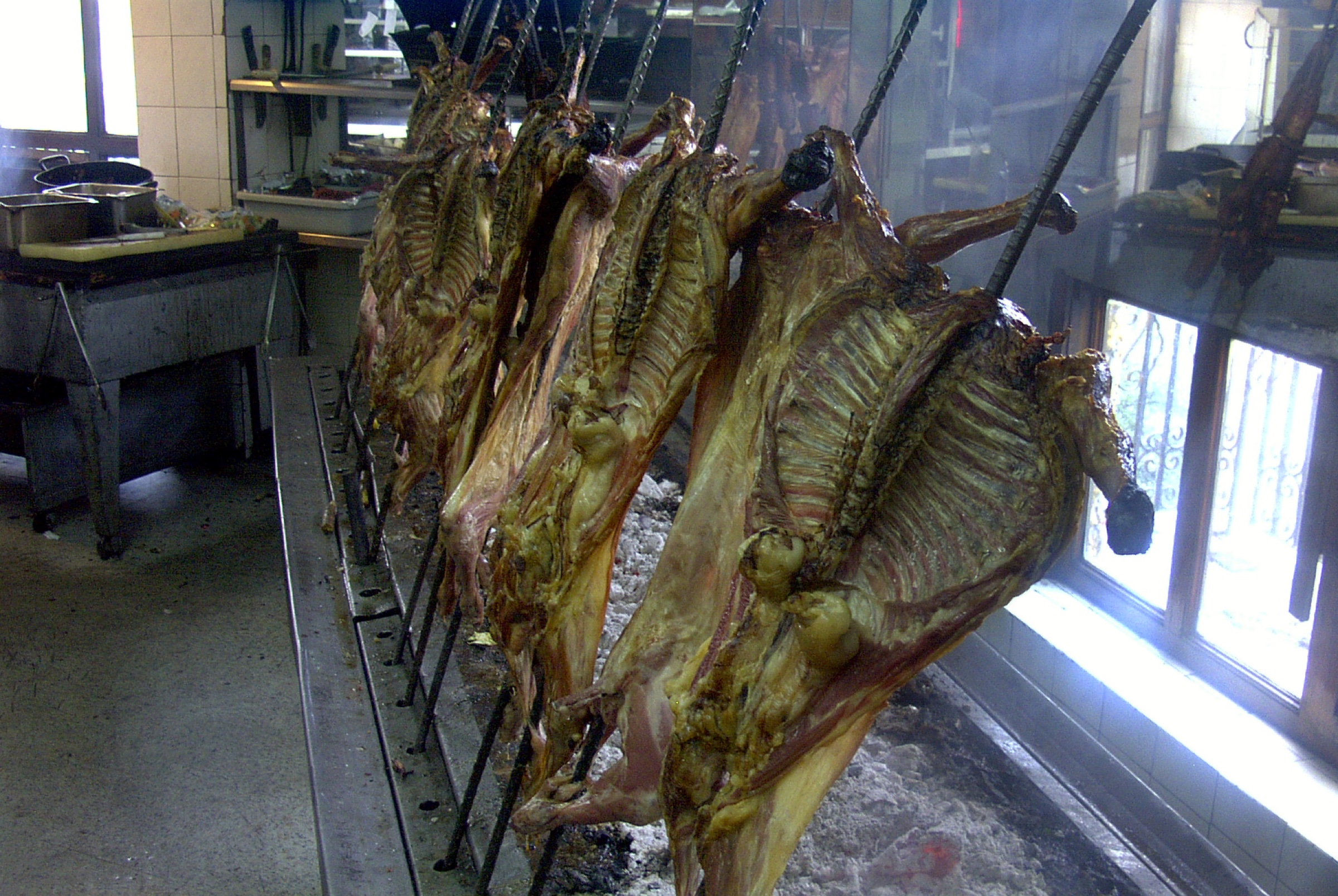
Asar. To grill. Northern cooking is built around asar, and the Saturday social event — carne asada — takes its name from the verb. The asador is the grill itself.
Pipa. A water-truck delivery service. You will see this word on signs across the metro after the 2022 drought. Order a pipa for water if your cisterna is empty.
Cisterna. A water-storage tank. Almost every upper-middle-class home has one now.
Things you should not say
A few central Mexican slang terms that will not work or will sound wrong:
- “Chido.” CDMX for “cool.” Northern equivalent is “bien chido,” “a todo dar,” or “chingón.”
- “Manito.” CDMX casual for “buddy.” Northern equivalent is “bato” or “carnal.”
- “Güey” is universal across Mexico but is heavier in CDMX; in the north it sounds slightly affected if you use it too much.
The greeting
In a casual setting, the Regio greeting is short. “Qué onda” for “what’s up,” “quihubo” for “how’s it going,” both contractions of longer phrases. Handshakes are firm, single-pump. A hug between male friends is normal; a single cheek-kiss between a man and a woman who know each other is normal; no kiss is also normal. There is no double cheek-kiss as in Spain or France.
In a formal setting — meeting someone’s parents, a business meeting, a wedding — the greeting becomes longer and more deferential. “Mucho gusto, cómo está usted” rather than “qué onda.” The shift in register is sharper than in either CDMX or southern Spain.
The cantinas and mezcalerías of barrioantiguo.com.mx are the best place to practice. Order a mezcal, listen for an hour, repeat the words back at the table.
One last note
The Regio accent itself — the clipped delivery, the slight Texan twang on certain vowels, the speed — takes longer to acquire than the vocabulary. But if you arrive with the vocabulary right, the accent gets forgiven. A visitor who says bien chido and orders tortillas de harina and offers a fierro pariente at the right moment will be received as someone who is paying attention. That is the bar, and it is a low one.